Solar Street Light Maintenance in Nigeria: How to Keep Your Lights Working Efficiently
 By D.O Green Solar
- Published
- 10 min read
Keep solar street lights working well in Nigeria: safe panel cleaning, shade and pole checks, signs of charging problems and when to call a professional.
On this page
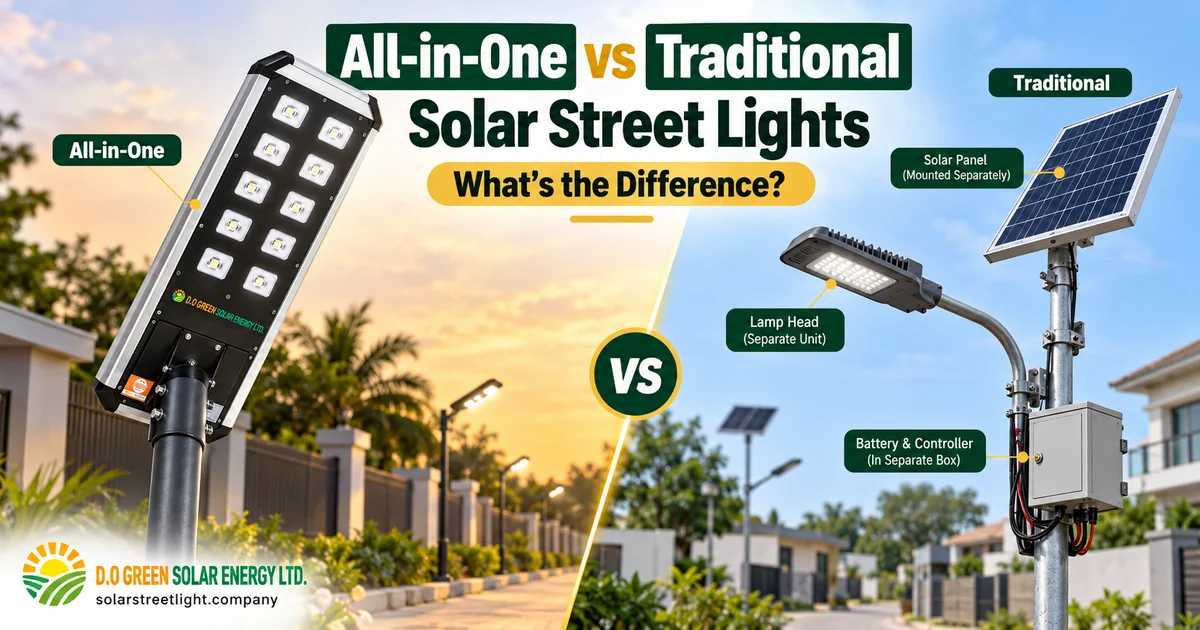
Solar street lights are often described as maintenance-free. They are not, but they are low-maintenance. There are no electricity bills, no cables to a distribution board and, with an all-in-one unit, no separate battery box at the foot of the pole. What remains is a short list of things that only an owner, estate manager or facility manager is likely to notice: a panel covered in dust, a tree that has grown into the light’s sky, a bracket that has worked loose, or a light that seems dimmer than it used to be.
This guide covers those checks, what different symptoms can mean and when to hand the job to a professional. It assumes your lights are already installed. If you are still at the planning stage, our guide on what to consider before installing solar street lights covers that part.
Why occasional maintenance matters
An all-in-one solar street light runs on the energy its panel collects during the day. Anything that reduces that energy, such as dirt, shade or a panel knocked out of position, leaves less stored charge for the night. The light may still come on, so the problem can go unnoticed for weeks.
Regular attention helps you:
- catch small problems, such as new shade or a loose fitting, before they become bigger ones;
- spot damage early, which matters for safety as well as performance;
- keep a record that makes any later conversation with your supplier, or any warranty question, much easier.
Most of this is observation from the ground. It does not need tools, a ladder or any technical knowledge.
Look first, from the ground
The safest and most useful maintenance habit is a walk around the site, once in daylight and once after dark.
In daylight, look up at each light and note:
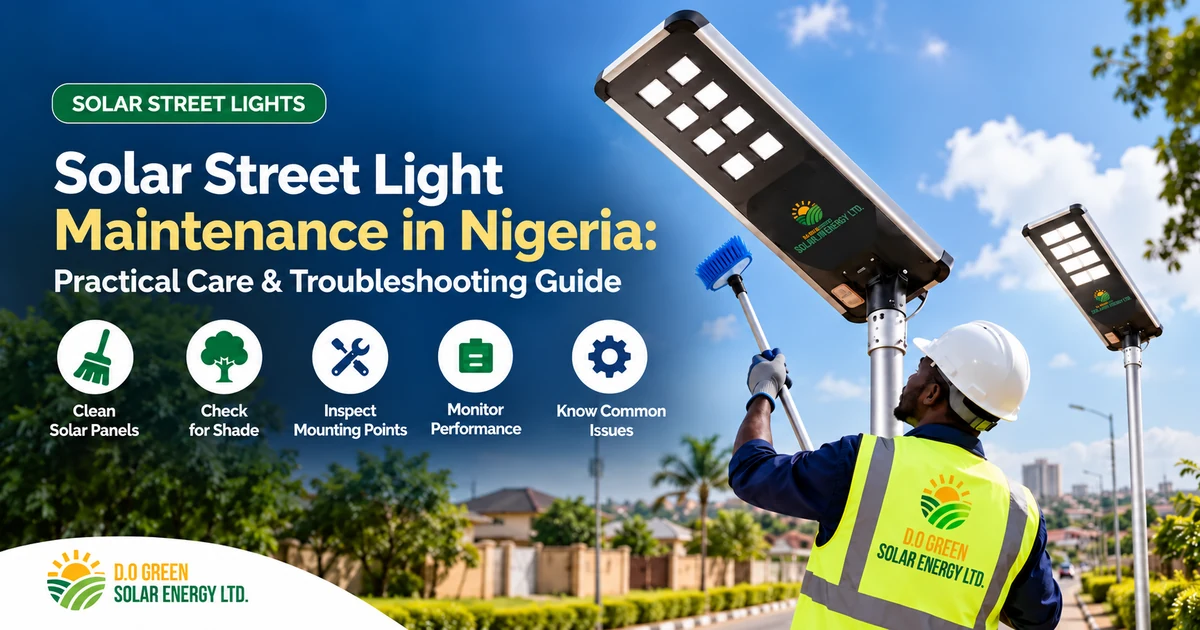
- dust, bird droppings, leaves or other debris on the panel;
- branches, new buildings, signboards or other structures that now shade it for part of the day;
- whether the unit and its panel still sit at the same angle as when they were installed;
- cracks, impact marks or other visible damage to the housing.
After dark, check:
- that each light comes on;
- whether any light looks noticeably dimmer than the others of the same model;
- whether any light goes off much earlier in the night than it used to.
Give each light a number, if you have not already, and write down what you see. A simple record of dates, positions and observations turns “some lights are not working well” into something a supplier can act on.
Cleaning the solar panel safely
Dust and dirt on the panel’s surface reduce how much sunlight reaches it, which means less energy for the night.
Know when cleaning is needed
Look at the panel from the ground first. A light dusting may be washed off naturally by rain. A thick layer of dust, bird droppings or debris that stays after rain is a sign the panel needs attention, especially if the light has started to perform worse.
Do not climb the pole
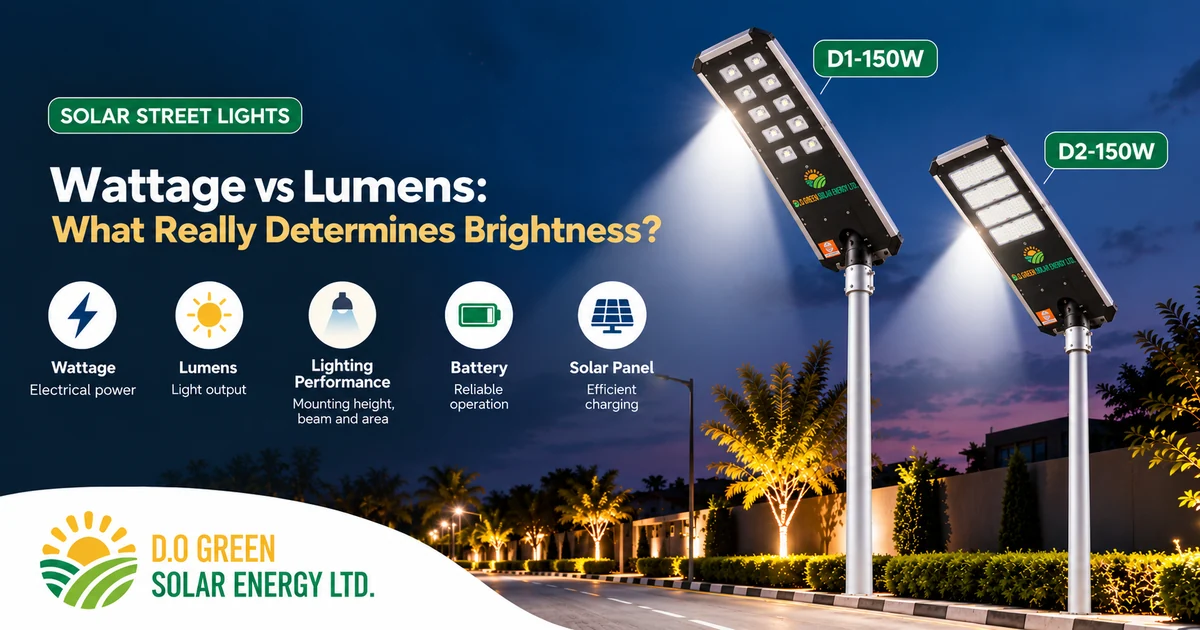
The D1-150W and D2-150W have a recommended installation height of 6–8 m. That puts the panel well out of reach, and cleaning it is work at height. Do not climb the pole, lean a ladder against it or stand on a vehicle to reach the light. Arrange for a trained person with suitable access equipment to do it, such as your installer or a contractor experienced in working at height.
Use a gentle method
Whoever cleans the panel should follow the product instructions. As a general rule, a soft cloth or sponge and clean water are kinder to the panel’s surface than abrasive pads, harsh chemicals or a high-pressure jet. They should not open the unit, disconnect anything or change settings as part of cleaning.
Keeping shade under control
Shade is one of the most common reasons a well-installed solar light starts to underperform. It rarely appears overnight. A tree grows a little each year, a neighbour adds a storey, or a new signboard or water tank goes up beside the road.
When you walk the site, look at each panel and ask what has changed since installation. If a tree is the problem, trimming it is often the simplest answer. Any trimming near a pole or overhead lines should be done by people trained and equipped for it. If the shade comes from a building or a structure that cannot move, talk to your supplier or installer about whether that light should be repositioned.
For more on how shade affects all-in-one lights, see why sunlight and shade matter at each pole.
Checking poles and mounting brackets
A pole and bracket hold a heavy unit several metres above a road or path, so their condition is a safety matter. From the ground, look for:
- a pole that is leaning or has moved since it was installed;
- rust, flaking paint or corrosion, particularly at the base and at joints;
- cracks or damage to the foundation, or soil washed away from around the base;
- dents or damage from vehicles;
- a bracket or light that looks loose, tilted or out of line with the others.
If you see any of these, keep people and vehicles away from the area under the light if it looks unsafe, and contact your installer or supplier. Do not try to tighten, straighten or repair a pole or bracket yourself. If you need replacement or additional poles, our solar street light poles page explains what to share when you ask.
Signs of battery or charging problems
You cannot see a battery from the ground, but you can see how the light behaves. A light that goes off much earlier than it used to, looks dimmer than other units of the same model, works after sunny days but struggles after cloudy ones, or does not come on even after a run of good weather may have a charging or battery problem.
These symptoms do not tell you the cause on their own. A light that runs for a shorter time may simply be collecting less energy because of new shade or a dirty panel, so rule out the simple causes in the table below first.
The battery sits inside the all-in-one unit. Do not open the light, disconnect its battery or attempt electrical repairs. Doing so is unsafe at height, needs proper knowledge and could damage the unit.
Common causes of dim or non-working lights
When a light is dim or stops working, the cause is often one of these:
| What you notice | Possible causes to check |
|---|---|
| Light goes off earlier than before | New shade, a dirty panel, a run of cloudy weather, or a battery or charging fault |
| Light is dimmer than similar units | Less stored energy, the light's operating settings, or a fault |
| Light does not come on at all | No charge after poor weather or heavy shade, a damaged unit, or a fault |
| One light behaves differently from its neighbours | Shade or dirt at that position, a change in panel angle, or a fault in that unit |
| Visible damage to the housing or panel | Impact, vandalism or storm damage |
Keep in mind that light output can also change through the night by design. The manufacturer’s manuals for the D1-150W and D2-150W list a default mode that steps brightness down over the night, so a light that is dimmer late at night than in the early evening may be working as intended. If you are unsure, compare it with other units of the same model at the same time.
Dust, heavy rain and the seasons in Nigeria
Weather in Nigeria affects solar lights in different ways through the year.
- Harmattan. The dry, dusty Harmattan season can leave a layer of fine dust on panels, and hazy skies reduce the sunlight reaching them. Check panels more often during this period, and expect lights to collect less energy on very hazy days.
- Rainy season. Long spells of heavy cloud mean less energy for the panel to collect, so some lights may not last as long into the night as they do in the dry season. Rain can also wash dust off panels, which helps.
- Storms and strong wind. After a storm, look for fallen branches, debris on panels, tilted units and any damage to poles or brackets.
- Flooding and standing water. Look at pole bases after heavy rain for erosion or washed-out soil.
The D1-150W and D2-150W have an IP65 rating, which describes protection against dust ingress and water jets. It is not an immersion rating, so it does not mean a unit can sit under water. If water ever reaches a light, or a unit is damaged, contact your supplier rather than testing it yourself.
When to call a professional
Some jobs should always go to a trained person or to your supplier:
- any cleaning or inspection that needs someone to reach the light;
- a pole that is leaning, cracked, badly corroded or damaged at its base;
- a loose, tilted or damaged unit or bracket;
- a light that keeps underperforming after you have ruled out shade and dirt;
- any visible damage to the housing or panel;
- moving a light to a sunnier position.
When you get in touch, share the model, where the light is installed, what you have noticed and when it started. Photos of the light and its surroundings help a great deal.
Warranty and records
The D1-150W and D2-150W have a stated warranty of 36 months, excluding artificial damage. That summary does not cover every condition, and not every fault will be covered, so check the applicable terms with your supplier.
Good records make any warranty question easier. Keep your proof of purchase, the model fitted at each position, the installation date and photos of each light. Our FAQs on warranty and support explain what to keep and who to contact if a light stops working.
Frequently asked questions
Are solar street lights maintenance-free?
No, but they are low-maintenance. Most of the work is checking from the ground that panels are clean and unshaded, and that poles and fittings are sound.
How often should I clean the solar panel?
There is no single schedule that suits every site. It depends on how dusty the area is, the season and how much rain falls. Check the panels from the ground regularly, and have them cleaned by a trained person when dirt builds up and stays.
Can I clean the panel myself?
Only if it can be done safely without climbing the pole. On a light mounted at 6–8 m, that usually means a trained person with suitable access equipment. Follow the product instructions and avoid harsh chemicals, abrasive tools and high-pressure jets.
Why is my solar street light dim?
It may be collecting less energy because of shade, dirt or cloudy weather, or it may be in a lower-brightness part of its operating schedule. If it stays dimmer than similar units after you have ruled those out, contact your supplier.
Why does my light go off before morning?
The usual suspects are a dirty or shaded panel, a run of cloudy days or a charging problem. Check the simple causes first, then report the problem with the model, position and when it started.
Can I replace the battery myself?
No. The battery is inside the unit, which is mounted at height. Opening the unit or attempting electrical work should be left to trained people. Contact your supplier.
Need help with a light?
If a light is not performing as it should, contact us by phone or WhatsApp with the model, location and what you have noticed. For new projects, our installation page explains how we plan supply and installation, and the D1 and D2 specifications page lists the documented figures for both models.
About the Author